
A single hailstorm can leave your house looking fine from the driveway while quietly wrecking every layer of your exterior. Minnesota ranked third nationally for hail events in 2022, and a single storm in August 2023 caused over $1 billion in property damage across the Twin Cities. That kind of destruction brings two problems to your front door: a complicated insurance claim and a line of unfamiliar contractors ready to profit from your urgency. Roof hail claims can reach $40,000 to $60,000 in Bloomington, reflecting broader market shifts highlighted in CBS News Minnesota coverage on rising roof coverage changes and claim costs. Knowing what to expect before hiring a roofer is the difference between a fair repair and a costly mistake.
Key Takeaways
- Minnesota hail damage roof insurance claims that used to average around $10,000 to $15,000 now regularly total $40,000 to $60,000 when roof replacements, siding, gutters, and windows are included.
- Hail damage is rarely obvious from the ground, so a documented roof inspection by a trusted local hail damage roofing contractor in Bloomington, MN is critical before calling the insurance company.
- Large roof hail claims attract storm chaser roofing contractors who use high-pressure tactics, door-to-door pitches, and contracts that favor them over the homeowner.
- Bloomington homeowners should review their policy coverage type, verify contractor licensing and insurance, and collect clear written estimates before signing anything.
Why Roof Hail Claims in Bloomington Are Suddenly Hitting $40K–$60K
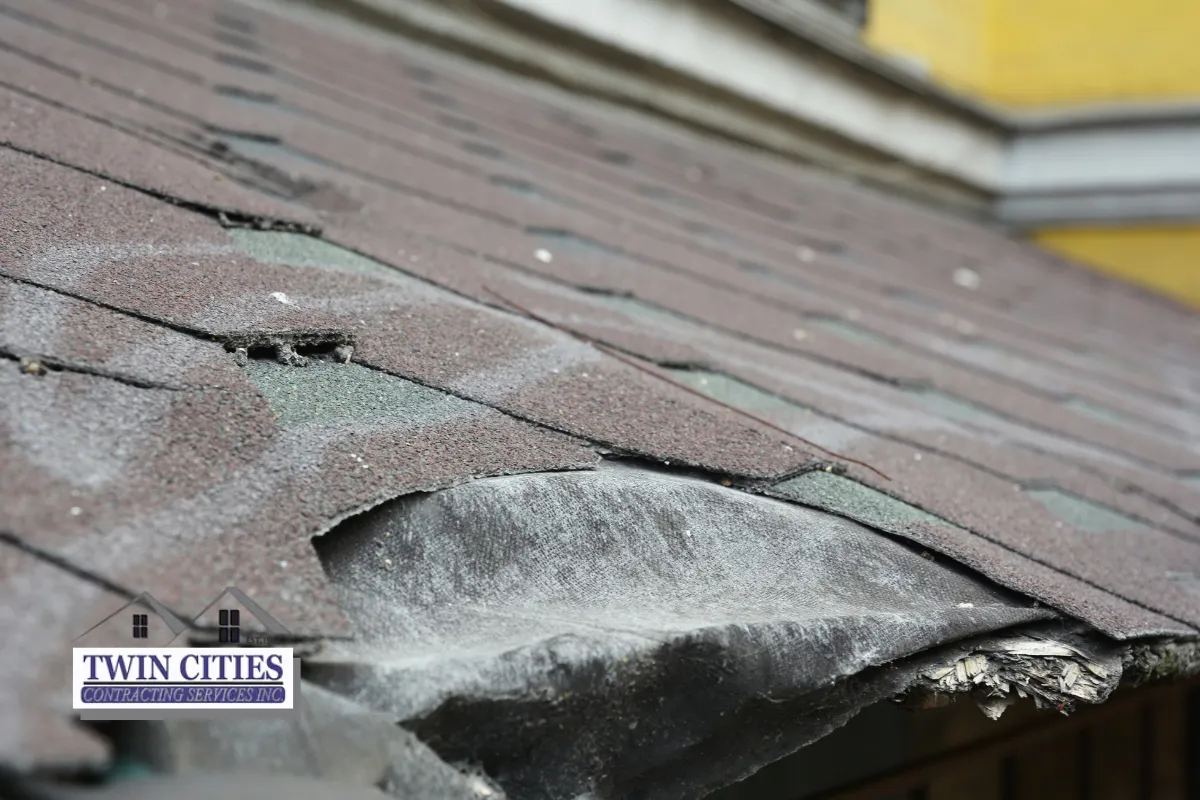
Five years ago, a typical roofing and siding claim in the Twin Cities ran $10,000 to $15,000. Today, the average roof claim in Minnesota is around $30,000, and claims involving full roof replacements plus exterior work regularly push into the $40,000 to $60,000 range. That jump reflects three forces converging at once.
First, hail rarely stops at shingles. A storm that dents your roof also dents gutters, downspouts, window screens, fascia, chimney caps, and siding. When the entire roof and these components need replacement, costs stack fast. Gutter installation, siding replacement, and damaged flashing repairs add thousands each.
Second, material and labor prices have climbed since 2020. Asphalt shingles, roofing materials like ice and water shield, and James Hardie fiber cement siding all cost more per unit than they did three years ago. Skilled labor is harder to find. These cost pressures hit every line item on an estimate.
Third, Minnesota Residential Building Codes require specific ice-and-water barrier membranes at eaves and valleys, proper ventilation upgrades, and enhanced flashing when a new roof is installed. Bloomington strictly enforces building codes related to roofing repairs and replacements. These code-mandated improvements add cost, but they also protect your home from future moisture intrusion. Insurers, meanwhile, are tightening coverage. Many policies now apply actual cash value depreciation on older roofs instead of paying full replacement cost, and cosmetic damage exclusions are becoming standard on metal and siding components.
How Hail Actually Damages Your Roof (And Why You Can’t See It From the Yard)
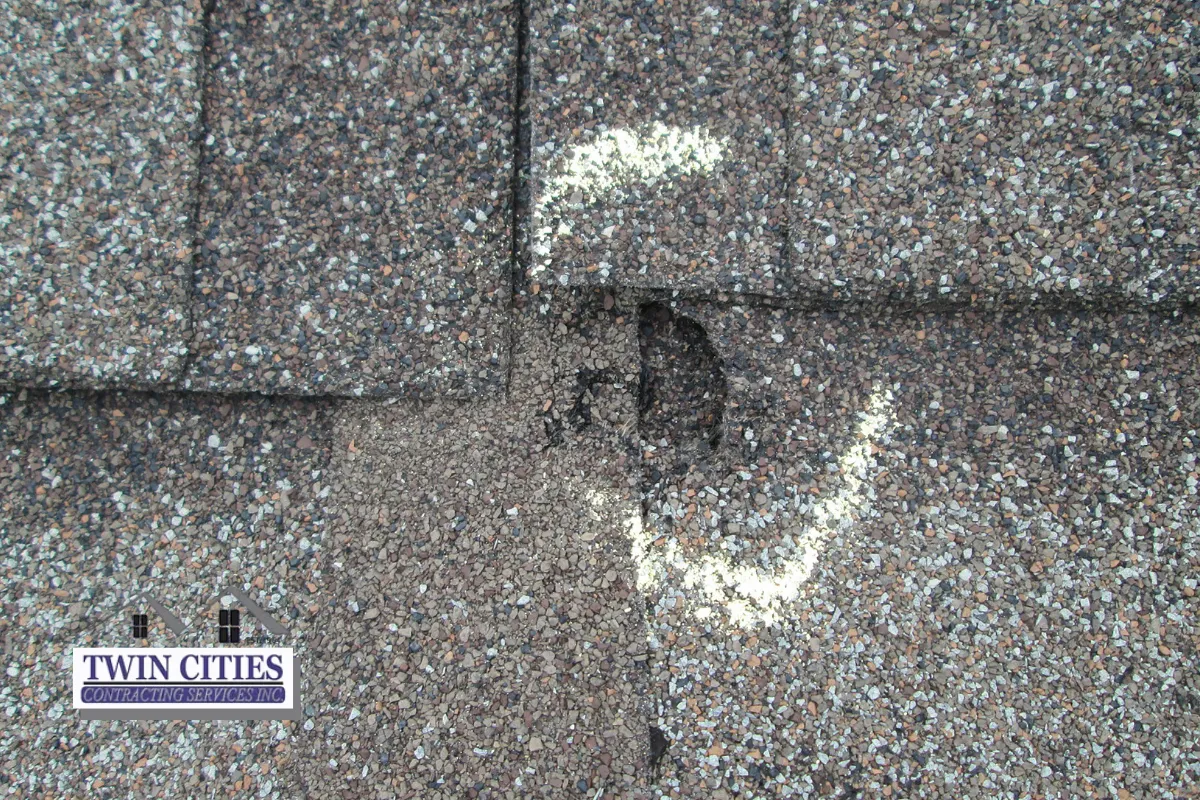
Hail can cause bruised, cracked, or missing shingles. On asphalt shingles, the damage shows up as:
- Soft, circular dents where the shingle mat is compressed
- Clusters of protective granules knocked loose, exposing dark asphalt underneath
- Fractured fiberglass backing that may not be visible from above
- Loosened seal strips that increase vulnerability to wind damage and blow-off during high winds
Granule loss from hail impacts can shorten shingle life by years, even when no leak appears right away. Exposed asphalt degrades faster under UV light, accelerating the aging process. Hail damage can lead to leaks months or years later as weakened areas deteriorate through freeze-thaw cycles and rain.
From ground level, this damage often looks like normal color variation. Homeowners underestimate roof damage because the signs blend in with the rest of the surface. Related components tell a different story. Dents in gutters, vent pipes, and flashing are easier to spot and often correlate with shingle impacts above. A professional roof inspection can identify hidden storm damage that you would never notice from the yard.
Normal Roof Aging vs. Legitimate Hail Damage: What Insurance Adjusters Look For
An insurance adjuster visiting your Bloomington home will look for specific patterns that distinguish storm damage from wear and tear.
Signs of normal aging include:
- Uniform granule loss across the entire roof surface
- Curling or cupping at shingle edges
- Brittle, cracked asphalt that has degraded over 15 to 25 years
- Consistent discoloration or moss growth from prolonged moisture exposure
Storm-related hail damage looks different:
- Random circular bruises concentrated on one elevation or slope
- Localized granule displacement with sharp edges revealing fresh asphalt
- Impact marks on one side of ridge vents, pipe boots, and flashing
- Visible damage that appears abrupt rather than gradual
The insurance company adjuster evaluates roof age, shingle type, the actual condition of the roof before the storm, and whether the damage affects water-shedding performance. Homeowners should gather pre-storm photos, maintenance records, and any previous roof inspection reports to show their roof was in fair condition before the hail event. This documentation supports the claim and separates legitimate storm damage from pre-existing wear.
Insurance Changes Every Bloomington Homeowner Should Review Before a Storm Claim
Minnesota law requires every homeowner’s policy to cover hail damage. But the terms of that coverage vary, and the details matter.
Homeowners should understand their insurance policy’s coverage type. An RCV policy pays to replace the roof at current prices. An actual cash value policy subtracts depreciation based on the roof’s age, which can reduce payouts by 20% to 70% on an older roof. The difference between a $45,000 replacement cost payout and a $20,000 ACV payout is the gap you pay out of pocket.
Many homeowners are surprised to learn they have a percentage-based deductible instead of a flat deductible. Minnesota wind and hail deductibles are usually 1% to 5% of dwelling coverage. On a home insured for $400,000, a 2% hail deductible means $8,000 out of pocket before the insurer pays anything.
Other policy details to confirm before storm season:
- Whether cosmetic damage to metal siding, gutters, or roofing is covered or excluded
- Whether code upgrades like ice and water shield, ventilation, and new flashing are covered when a full replacement is required
- Whether a partial replacement is an option or whether the insurer requires the entire roof to be replaced
Insurance companies may require roof replacements even without active leaks if the adjuster determines the roof’s water-shedding integrity is compromised. Homeowners generally have one year to file a hail claim, so acting promptly protects your rights without rushing decisions.
Storm Chaser Roofing Contractors: Red Flags at Your Bloomington Front Door
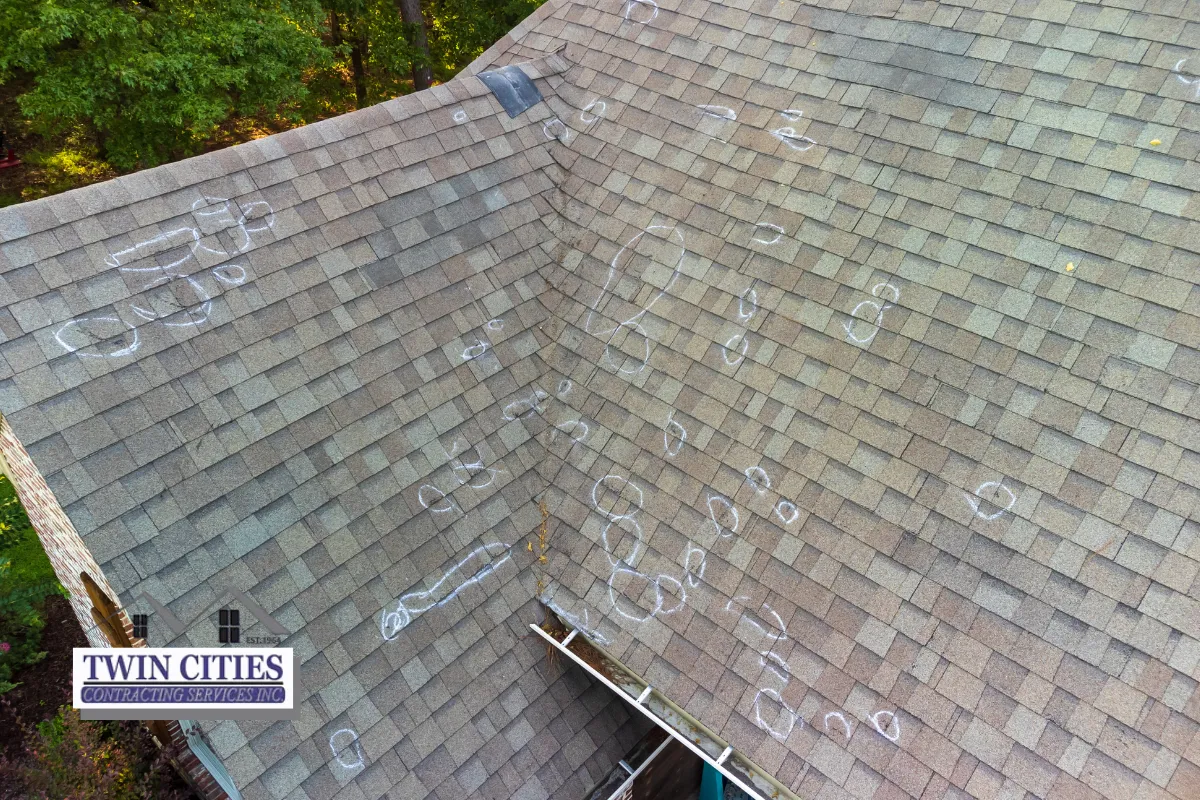
Within hours of a hailstorm, unfamiliar trucks roll through Bloomington neighborhoods. These storm chaser roofing contractors knock on doors, offer a free inspection, and push homeowners toward quick decisions. Legitimate contractors do not pressure homeowners to make quick decisions after a storm.
Red flags to watch for:
- Out-of-state license plates or temporary local phone numbers
- No permanent Minnesota business address
- Pressure to sign a contract the same day
- Promises to ‘cover,’ ‘absorb,’ or rebate your deductible; under Minnesota Statute § 325E.66, it is illegal for residential contractors to offer any payment or credit to cover a homeowner’s insurance deductible.
- Requests to sign an Assignment of Benefits, giving the contractor control over your insurance claim
- Demands for large upfront payments before any work begins
Homeowners should never agree to an illegal deductible waiver when dealing with contractors. Under Minnesota law, homeowners have a 72-hour right to cancel contractor agreements after signing, so if you did sign under pressure, you still have a window to reverse that decision.
These companies often disappear after collecting final payment, leaving no one to honor a workmanship warranty, handle a follow-up roof repair, or respond when leaks appear. Slow down, gather multiple estimates to understand potential out-of-pocket costs, and prioritize a proven storm damage roofer in Bloomington with a track record you can verify.
How to Vet a Hail Damage Roofing Contractor in Bloomington, MN
Before hiring a contractor, homeowners should verify their local credentials and insurance. Here is what to check:
- Active Minnesota roofing contractor license
- Liability insurance and workers’ compensation coverage (ask for certificates)
- A permanent business address in or near Bloomington, not a P.O. box
- References from local projects you can drive by and inspect
Request written, line-item free estimates that separate labor, roofing materials, insurance scope items, and potential supplements for hidden damage discovered during tear off. Reputable contractors will not demand the entire project cost upfront but rather stage payments based on progress milestones.
Ask about:
- Workmanship warranty length and what it covers
- Manufacturer certifications (these affect warranty eligibility on shingles and underlayment)
- Project timeline and who supervises the crew on-site
- Whether the contractor will help document hail damage for your insurance claim
It is advisable to get an independent inspection from a reputable professional before filing an insurance claim. A qualified local roofer who knows Bloomington building codes can identify damage the insurance adjuster might miss and help you build a complete claim file.
Working With Your Roofer on an Insurance Claim Without Losing Control

The process should follow a clear sequence:
- Get a professional roof inspection with photo documentation
- Contact your insurer to file the claim
- Schedule the adjuster visit; ask your roofer to be present during the insurance adjuster’s visit to ensure all damage is documented
- Compare the adjuster’s scope with your roofer’s findings
- Agree on scope and schedule the work
File your insurance claim promptly after documenting damage. Do not sign any contract that gives the roofer full control of the insurance claim money or locks you into one contractor before the adjuster has completed their assessment.
It is common for initial claims to be undervalued. A knowledgeable roofer can help secure proper compensation by identifying missing line items such as gutters, roof ventilation, or damaged flashing. When hidden damage or Minnesota code requirements are discovered during the tear off, reputable contractors submit supplement requests to the carrier with supporting documentation.
In Minnesota, if replacement shingles or siding cannot be matched in color and quality to existing materials, the insurer may be required under state matching guidelines to replace entire contiguous slopes or elevations rather than leaving mismatched repairs.
From Emergency Tarping to a New Roof: Setting Realistic Expectations
Check for active water intrusion immediately after a storm. If you find leaks, missing shingles, or exposed decking, emergency tarping can prevent further water damage while you wait for the claims process to begin.
Document storm damage immediately using photos and videos. Photograph hailstones next to a ruler, dents on soft metals, and any interior water stains. Document storm damage with dated photos within 72 hours; this creates a timestamped record that connects damage to a specific storm date.
Realistic timelines during peak storm season in Bloomington:
- Adjuster visit: 1 to 3 weeks after filing
- Claim approval: varies, but typically 2 to 4 weeks
- Material ordering: 1 to 2 weeks depending on availability
- Full roof replacement: 1 to 3 days of on-site work for most homes
Plan for noise, debris in the driveway, and temporary disruption to landscaping. Some projects include coordinated work on gutters, siding, and windows to restore the entire exterior. All roofing services performed in Bloomington must meet current local building codes, including proper ventilation and ice and water shield installation at eaves and valleys.
How Twin Cities Contracting Services Inc. Helps Bloomington Homeowners With Hail Damage
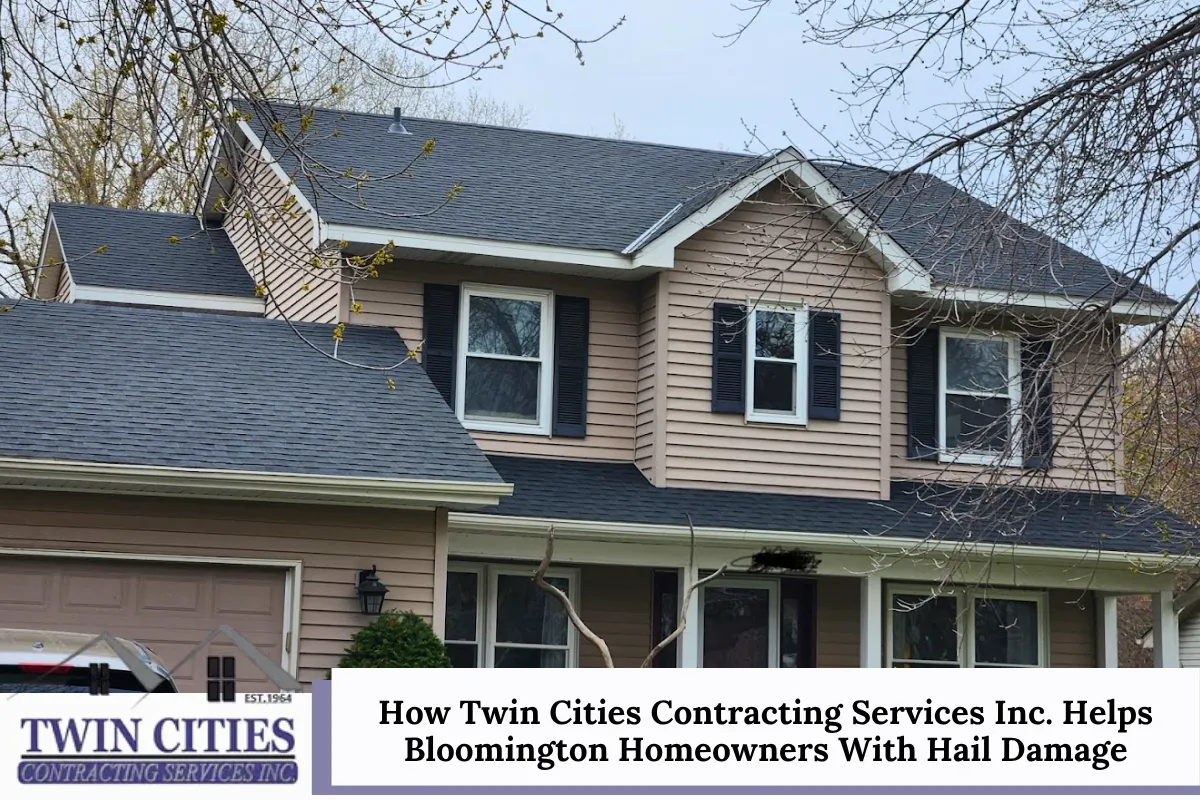
Roof hail claims that reach $40,000 to $60,000 make contractor selection one of the most consequential financial decisions a Bloomington family can face. Whether you need a roof inspection after a recent storm or a full replacement covered by insurance, the process works best when your contractor is local, licensed, and willing to walk you through every step.
Schedule a professional inspection quickly after a hail event, even if no leaks are visible. Keep notes on your policy details, contractor questions, and inspection findings so you stay in control. A local roofing contractor who responds fast and stands behind their work protects your investment for years after the last shingle is installed correctly.
Schedule Your Bloomington Hail Damage Inspection With Twin Cities Contracting Services Inc.
We are Twin Cities Contracting Services Inc., a local roofing and exterior contractor based. Our team has handled hundreds of Twin Cities hail damage restorations, from emergency tarping to complete roof, gutter, and siding projects. We provide detailed roof inspection reports, photo documentation, and clear written estimates so you can navigate your roofing insurance claim without pressure. We respond quickly after storms and coordinate every phase of restoration in one organized project. Call us at (952) 405-6201 or visit our website to request a storm damage assessment. You can also fill out our contact form to get started.
Frequently Asked Questions
How soon after a hailstorm in Bloomington should I schedule a roof inspection?
If you have active leaks, arrange emergency tarping the same day. For all other situations, schedule a professional inspection within a few days to two weeks of the storm. Waiting months allows rain and freeze-thaw cycles to worsen hidden damage, and it becomes harder to connect that damage to a specific storm date when you file your claim. On the day of the storm, take photos of hailstones, yard debris, and dents on outdoor surfaces. These dated records strengthen your claim file. Reputable local roofers generally prioritize recent storm dates and can help you determine whether the extent of damage justifies contacting your carrier.
Can small hail really cause roof damage that justifies an insurance claim?
Hail size is only one factor. Wind speed, impact angle, storm duration, and the age of your roofing materials all influence how much damage occurs. Even marble-sized hail driven by high winds can knock protective granules loose, bruise the shingle mat, and weaken seal strips, especially on roofs older than 15 years. Dents in soft metals like gutters and downspouts are a reliable indicator that shingles above were also impacted. Do not dismiss a storm just because the hail looked small. A qualified local roofer can document whether the damage rises to the level of a legitimate insurance claim worth filing.
What should I ask a roofer about warranties on a hail-related roof replacement?
Ask for both the manufacturer warranty on shingles and underlayments and the contractor’s own workmanship warranty in writing. Manufacturer warranties typically cover defects in the roofing products themselves, such as premature granule loss or cracking. Workmanship warranties cover installation errors that lead to leaks or premature failure. Confirm that the roof system will be installed to manufacturer specifications, because improper installation can void extended warranty coverage. Before making the final payment, request copies of all warranty documents. Ask what maintenance steps are required to keep warranties valid, such as periodic inspections or keeping trees trimmed away from the roof surface.
Do I need to be home when the insurance adjuster inspects my roof?
Being home is not required, but it is strongly recommended. Your presence lets you ask questions, share your pre-storm photos, and point out interior signs like attic stains or ceiling water marks. Having your chosen roofer on-site during the adjuster’s visit often leads to a more thorough inspection. The contractor can highlight subtle hail impacts on shingles, identify code-required items the adjuster might not include, and note damage to components like pipe boots and flashing. Prepare a written list of concerns before the visit so nothing is overlooked. This is your opportunity to ensure the insurer captures the full scope of damage before the claim is finalized.
How can I protect myself from signing a roofing contract I later regret?
Do not sign anything on the same day a contractor knocks on your door. No matter how urgent the pitch feels, a reputable company will respect your need to make a calm, informed decision. Get at least two or three written estimates from established local roofers and take time to compare scope, materials, warranties, and pricing. Read all the fine print carefully. Watch for clauses that assign your insurance benefits to the contractor, lock you into one company before your claim is approved, or require large non-refundable deposits. Ask trusted neighbors or your insurance agent for input before committing. Remember that Minnesota law gives you 72 hours to cancel a contractor agreement after signing.
Disclaimer: This article provides general information for Bloomington, Minnesota homeowners. It is not legal, insurance, or structural engineering advice. Consult licensed professionals and your insurance company for guidance specific to your property and policy.