
Minnesota homeowners are facing rising insurance costs, changing roof coverage and another summer of severe weather. Here’s what Bloomington homeowners should know before the next storm.
Why Bloomington Roofing Is Suddenly a Hot Topic in 2026
Three forces are colliding across Hennepin County this year: more frequent hailstorms, the steepest homeowner insurance increase in the nation, and roof claims that now routinely hit $40,000 to $60,000. For most homeowners, Bloomington roofing was never a front-of-mind concern until a neighbor’s full replacement approval arrived next to their own claim denial. Severe weather patterns are increasing the demand for roofing services in Bloomington, and 2026 is turning into the year that demand for roofing services in Bloomington is expected to grow due to multiple factors converging at once.
Recent summers brought multiple hail events across the Twin Cities metro, with storms dropping quarter-size to golf-ball-size stones on residential streets in quick succession. Bloomington’s location within the metro hail corridor means these storms are not rare outliers; Bloomington averages 3 to 5 hail events per year, and 2026 has already logged 35 hail reports within 10 miles of the city, including stones as large as 2.25 inches.
Many Bloomington homeowners are hearing very different outcomes from their insurance companies after the same storm. One household gets a full replacement approved while the next-door neighbor faces a reduced payout or a denial based on roof age. The rest of this article breaks down what happened, what changed in insurance, and what Bloomington homeowners should do before the next storm hits.
Key Takeaways
- Minnesota homeowner insurance premiums jumped about 34% year-over-year, the largest single-year increase of any state, pushing the average annual premium to roughly $3,530.
- Hail-related roof claims across the Twin Cities metro now regularly reach $40,000 to $60,000 when full roof replacements, siding, gutters, and windows are involved.
- Many insurers have quietly shifted older roofs from full replacement cost coverage to actual cash value, leaving homeowners with larger out-of-pocket gaps after a claim.
- Bloomington homeowners should arrange a free inspection after any major hail event, document all damage with photos, and review their policy before filing a claim.
- Local, established Bloomington roofing contractors with verifiable licenses and references are a safer choice than door-to-door storm chasers who show up hours after severe weather
What Has Been Happening With Minnesota Roofs and Insurance Since 2024
Minnesota recently logged the largest homeowner insurance increase in the country. Average premiums climbed about 34% in a single year, adding roughly $900 to annual costs and bringing the average annual homeowners insurance premium in Minnesota to $3,530 in 2026. The state’s deputy commissioner of insurance attributed the spike to more extreme weather events, higher construction and repair costs, and an older housing stock that makes repairs more complex.
Escalating roofing material costs are impacting overall project valuations across the metro. Roof and siding claims that were commonly $10,000 to $15,000 a few years ago now often cost $40,000 to $60,000 when a full replacement is required. A full roof replacement costs $14,000 to $24,000 in Bloomington for asphalt shingles alone on a mid-size home, but when the same single storm also damages gutters, siding, and windows, the total claim reflects a much larger scope. Even a modest Bloomington rambler in east Bloomington can see a combined claim exceeding $40,000 when multiple exterior components are involved. Premium upgrades, such as choosing higher-grade architectural shingles or adding new gutters, add $2,000 to $6,000 to roof replacement costs.
High premiums and deductibles are compelling homeowners to address roof conditions before renewals, rather than waiting for a catastrophic failure.
Why Minnesota Are Different From Other Roof Markets
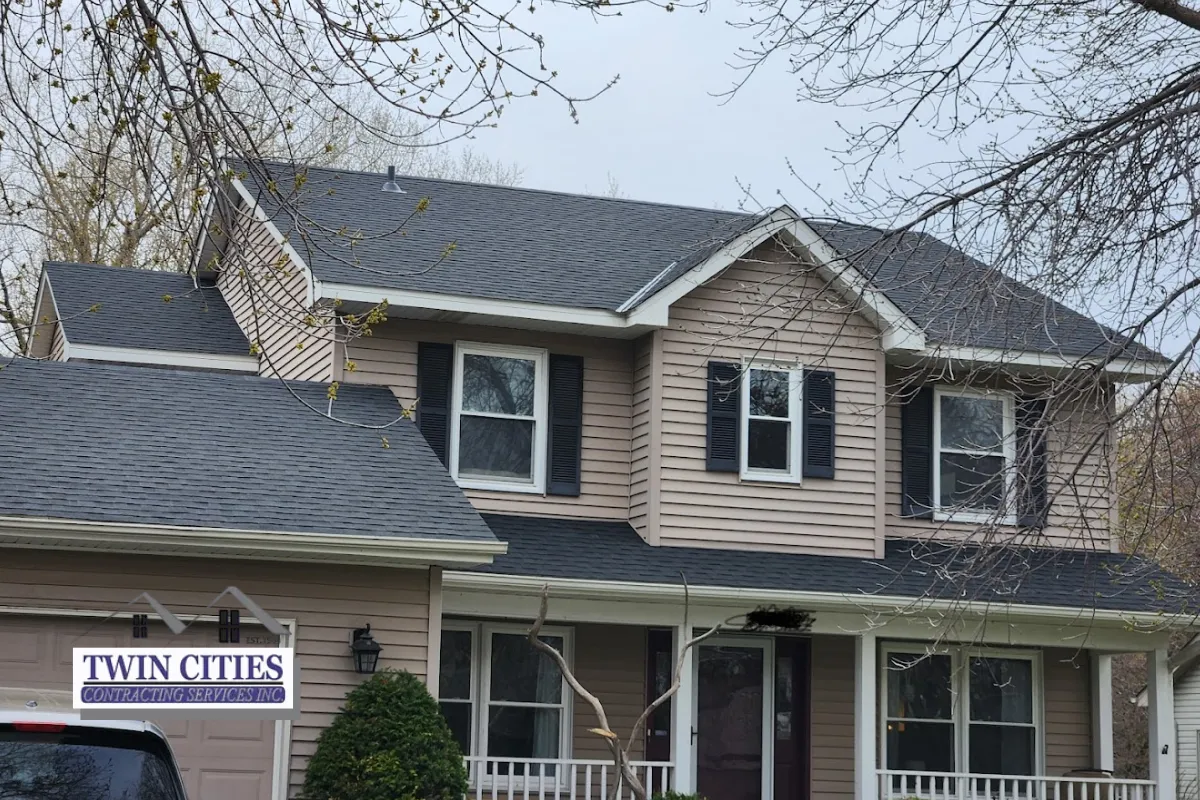
Bloomington sits in a high-risk corridor for Minnesota hail damage. The city is not just exposed to summer convective storms; it also endures freeze thaw cycles that stress roofing materials from October through April, heavy snow loads, and ice dams that exploit any weakness in the roof surface or underlayment.
Many Bloomington homes, from post-war Bloomington ramblers built in the 1950s and 1960s to two-story builds from the 1990s, carry roofs installed 20 or more years ago. Many residential roofs in Bloomington are reaching the end of their lifespan. Older roofs experience higher rates of damage during storms because weathered asphalt shingles lose flexibility and granule adhesion over time. A typical Bloomington rambler costs $9,000 to $15,000 for a straightforward roof replacement, while larger or more complex homes push into the $18,000 to $27,000 range. Roof replacement costs vary based on home size and complexity, including factors like pitch, valleys, and the number of roof penetrations.
What makes the cost in Bloomington higher than some other markets:
- Minnesota code requires ice and water shield at eaves, extending at least 24 inches inside the exterior wall line
- Full tear off is often required when more than two layers of shingles exist
- Attic ventilation and solid sheathing upgrades are enforced during replacement
- A building permit is mandatory for any reroof covering more than 100 sq ft
This combination of weather exposure, code compliance requirements, aging housing stock, and Bloomington’s high incidence of hail damage is part of why residential roof replacements here generate such large claims.
How Insurance Companies Are Quietly Changing Roof Coverage
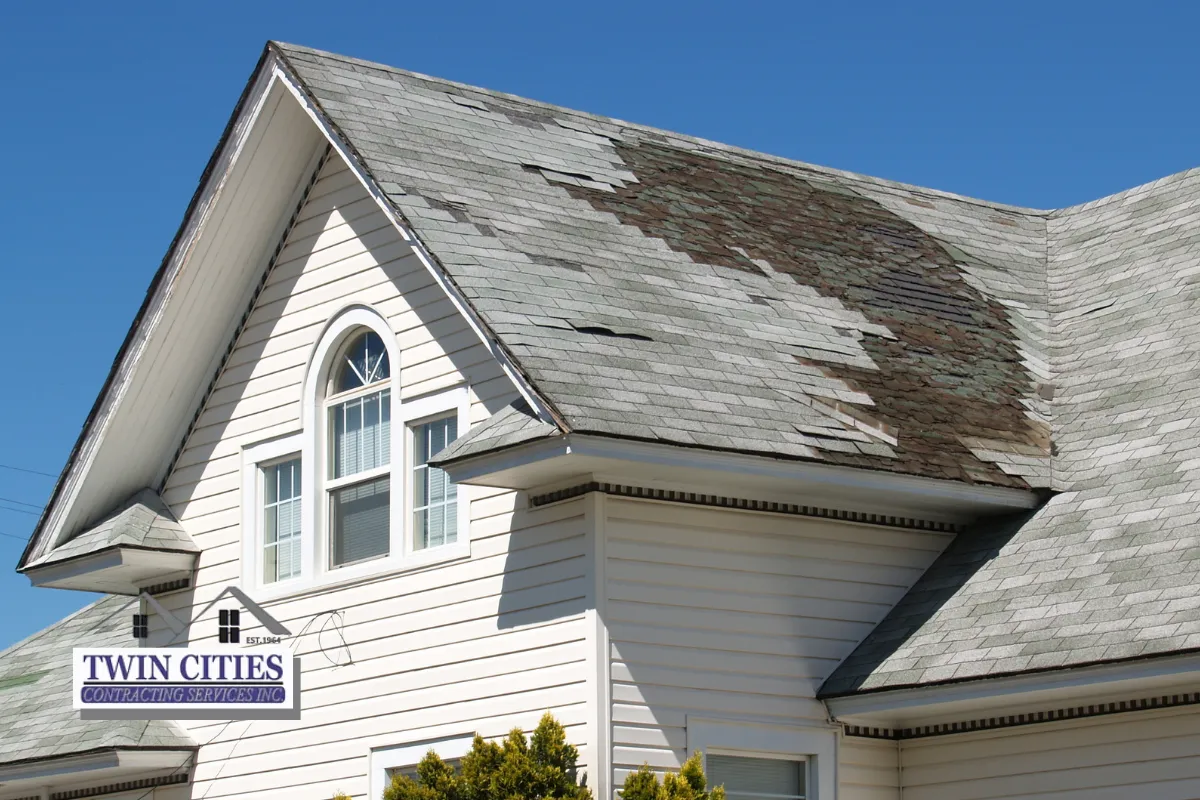
Many Bloomington homeowners still assume their policy pays full replacement cost for any covered hail damage. That assumption is no longer reliable. Most policies pay replacement cost value for hail damage claims, but a growing number of carriers have shifted older roofs to actual cash value. Replacement cost value pays for new materials of like kind and quality, minus the deductible. Actual cash value subtracts depreciation based on roof age and wear before paying out. For a 12-year-old roof on a home where full replacement would cost $18,000, an actual cash value policy might pay only $9,000, leaving the homeowner to cover the rest.
Higher out-of-pocket costs from these policy changes lead homeowners to seek professional inspections sooner after storms, hoping to catch damage while the roof still qualifies for better coverage.
Insurance companies have shifted many policies to percentage-based deductibles for wind and hail losses, sometimes 2% to 5% of dwelling coverage instead of a flat dollar amount. Stricter insurance verification standards are being imposed by companies in response to high claims volume in the metro. Cosmetic damage exclusions are also becoming common; if hail dents a roof vent but causes no leak, the insurer may minimize or deny the payout.
Before storm season, Bloomington homeowners should review three sections of their policy:
- The loss settlement clause, which specifies whether coverage is replacement cost value or actual cash value
- The deductible schedule, including any separate wind or hail deductible
- The exclusions section, looking for cosmetic damage limitations or roof age schedules
Scheduling a quick policy review with your insurance company before a storm hits can prevent an unpleasant surprise during the insurance claim process.
What Hail Really Does to a Bloomington Roof
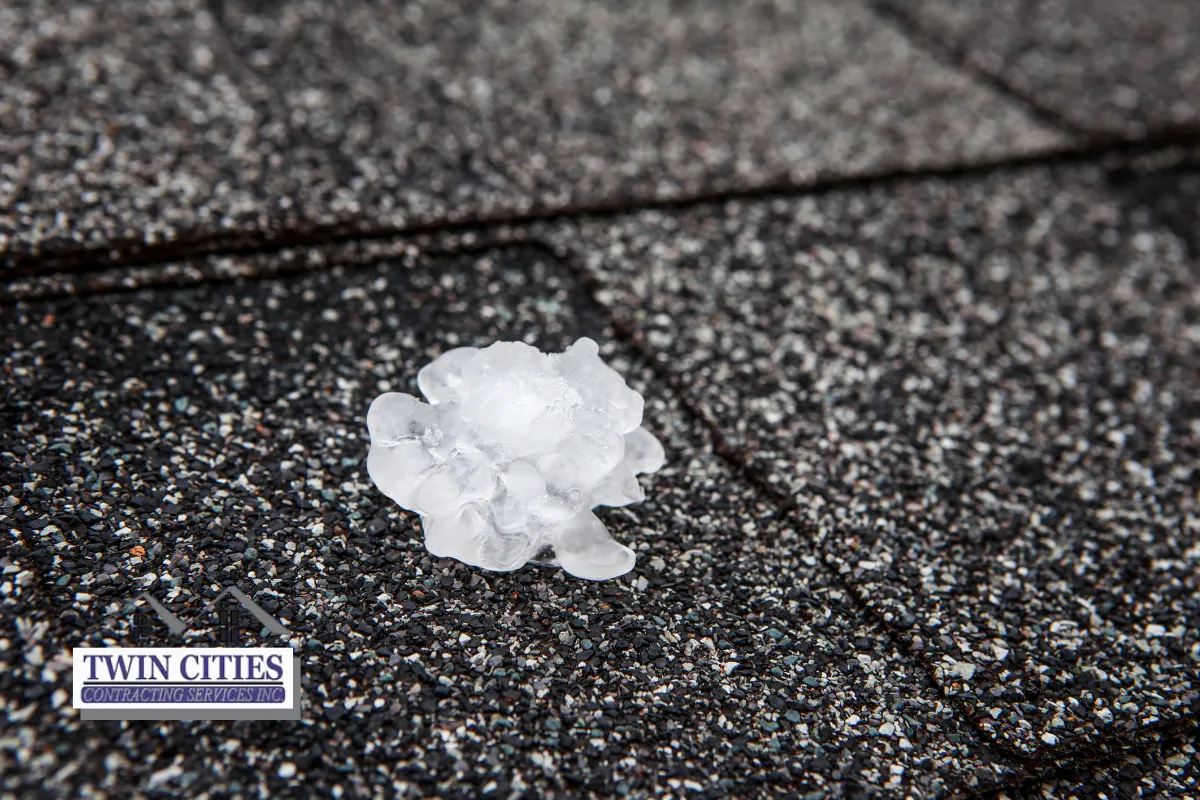
Video footage from the June 19, 2026 storms showed hail bouncing off driveways and lawns across the Twin Cities metro, with stones measured at 2.0 to 2.25 inches in diameter. Similar storms pound roofs throughout Bloomington neighborhoods each summer, and the damage is cumulative.
Hail striking asphalt shingles causes granule loss that exposes the fiberglass mat underneath. It also creates bruising and hairline cracks that compromise the shingle’s waterproofing layer. Soft metals, including ridge vents, pipe boots, drip edge, and gutters, show visible dents and deformation. On Bloomington’s older homes, where shingle life may already be reduced by years of UV exposure and freeze thaw cycles, even moderate hail accelerates failure.
Insurance may cover hail damage if it causes functional issues such as leaks, compromised waterproofing, or structural weakness. Cosmetic damage alone, like minor dents on vents or scattered granule loss without evidence of water intrusion, often results in reduced or denied payouts. A full replacement is justified when functional roof damage appears across multiple slopes, especially on older roofs showing pre-existing wear. Even if a Bloomington roof looks fine from the driveway, subtle impact marks can shorten its remaining life and influence future insurance coverage decisions.
Safe Ways Bloomington Homeowners Can Check for Hail Damage
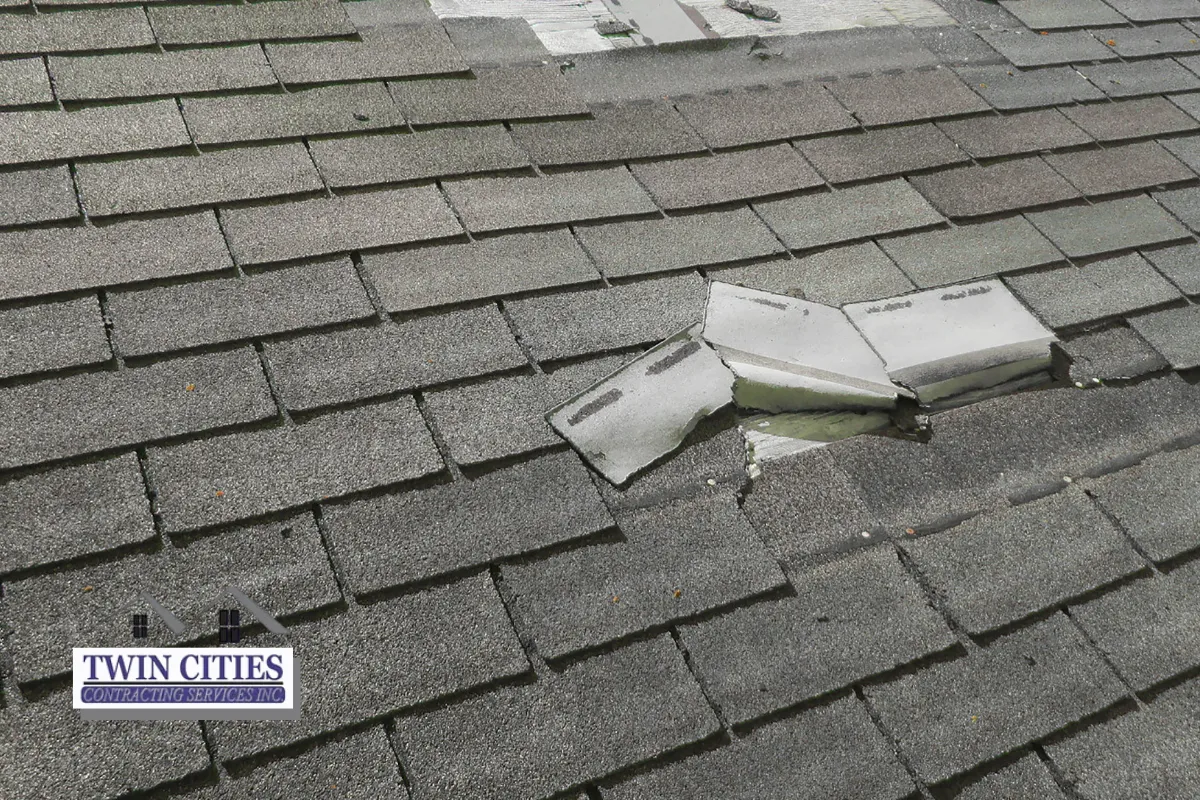
Never climb onto a steep, wet, or storm-damaged roof. Stay off ladders during high winds or immediately after storms when surfaces are slick and debris is unstable.
Greater demand for storm inspections typically follows major hail events, but there are several ground-level steps homeowners can take safely before a professional arrives:
- Walk the perimeter of your home and look for dented or cracked gutters, bent downspouts, and damaged window screens.
- Check the ground beneath downspouts for unusual accumulations of shingle granules; a sudden increase suggests hail stripped the roof surface.
- Look at outdoor air conditioning units, deck railings, and metal shed roofs for hail dents that confirm storm intensity at your property.
- Inspect siding for circular marks, chips, or cracks on the side of the home facing the storm direction.
- Go inside and check the attic or top-floor ceilings for new water spots, damp insulation, or daylight visible at roof penetrations.
- Photograph everything with a timestamp, including wide shots showing the full roof area from the ground and close-ups of any visible damage.
- Schedule a free inspection with a licensed local roofing contractor who can safely access the roof, document damage to shingles, flashing, ridge cap, and soft metals, and provide a written assessment useful for any future insurance filing.
Key Insurance Steps for Bloomington Roof and Hail Claims
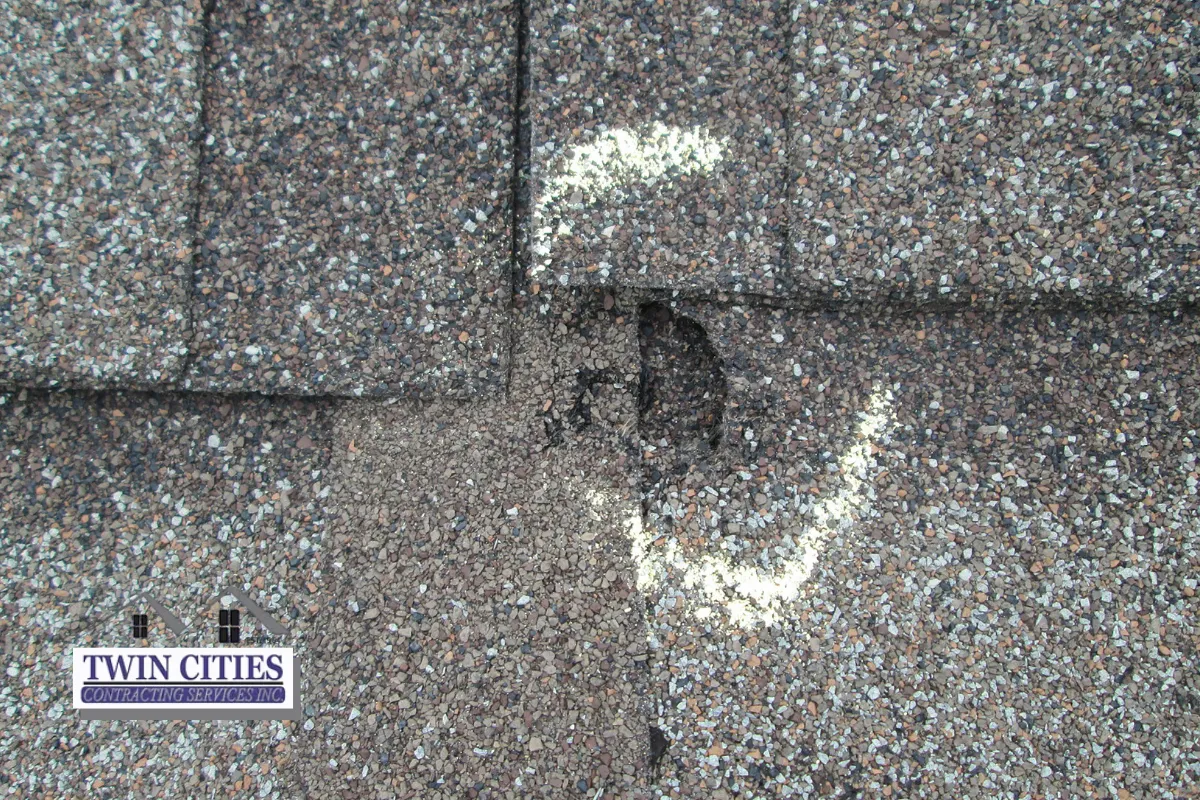
Reporting hail damage promptly is crucial for insurance claims. Most homeowner policies allow one year from the date of the event to file, but documenting conditions within a day or two gives the adjuster a clearer picture and strengthens the claim. Homeowners should report hail damage promptly to their insurer.
The basic claim sequence:
- Complete a ground-level and attic inspection, using photos and video with timestamps.
- Call your insurance company to open the claim and schedule an adjuster visit.
- Have an independent roofing contractor provide a separate detailed estimate covering the full scope of damage.
- Compare the insurance adjuster’s scope line by line with the contractor’s estimate; adjusters working from the ground may miss damage a contractor finds on the roof.
- Keep a dedicated folder with every photo, email, estimate, and dated notes from phone calls.
Bloomington roof insurance claims over $30,000 can become complex. Hail damage increases insurance claims complexity, especially because modern claims often bundle full roof replacements with siding, gutters, and other damage hit in the same event. Bloomington roofing companies are increasingly relied upon to help homeowners understand their estimates and identify missed items.
Licensed public adjusters can negotiate on a homeowner’s behalf, but contractors should not promise to “handle everything with the insurer” in ways that cross into adjusting without a license. The homeowner, not the contractor, controls the policy relationship.
Storm Chasers vs. Local Bloomington Roofing Experts
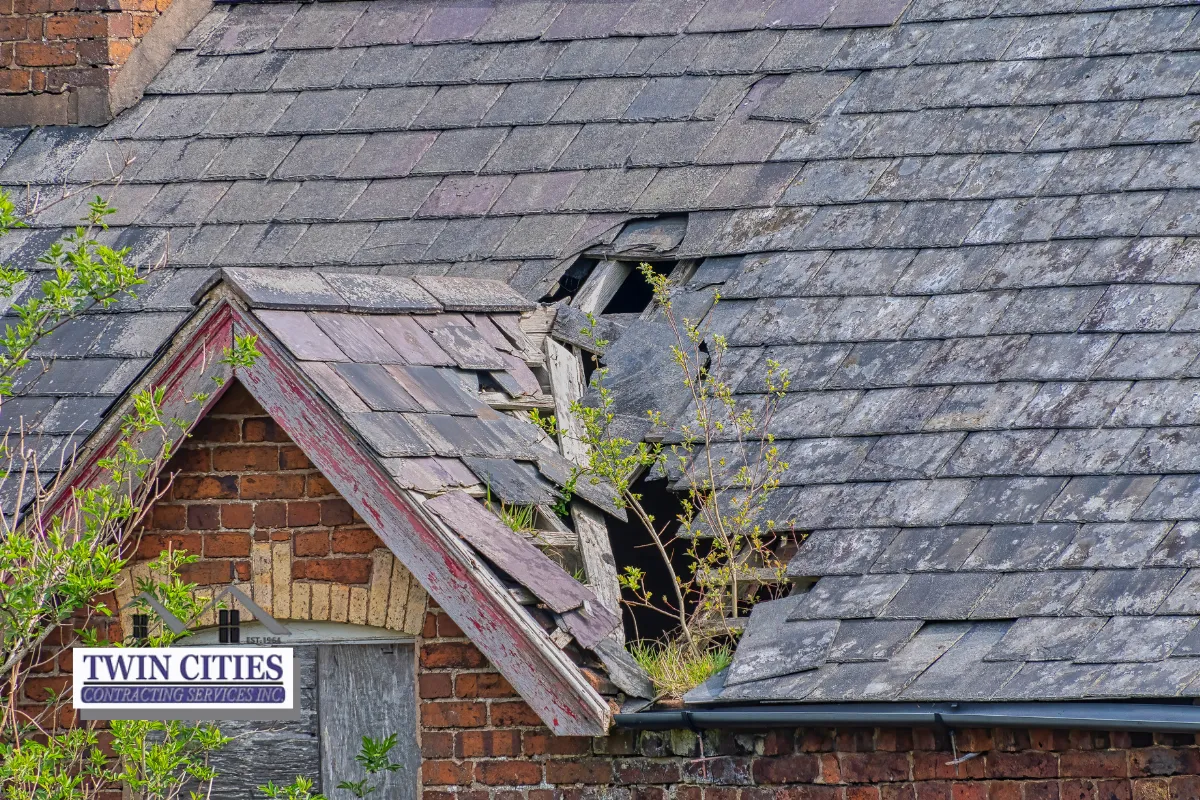
Within hours of a hailstorm, unfamiliar trucks with out-of-state plates roll through Bloomington neighborhoods. Crews knock on doors offering free inspections, “free roofs,” and urgent claims before the damage “gets worse.” This pattern repeats after every major storm, and it catches homeowners off guard when they are still processing what just happened.
Red flags to watch for:
- High-pressure tactics and demands for an immediate signature
- No local office address, vague business cards, or out-of-state license plates
- Offers to “cover your deductible” or “waive your out-of-pocket costs”
- Requests to sign assignment-of-benefits paperwork transferring claim rights
- No written estimates, or estimates with vague line items and no material specifications
What a reputable local roofing company should demonstrate:
- A verifiable Minnesota contractor license and liability insurance
- A physical local address, not just a P.O. box
- Detailed written estimates with material brands, labor scope, and transparent pricing
- Willingness to provide local references and show complaint history through the Better Business Bureau
- No demand for large cash payments before work begins
Before committing to any Bloomington roof replacement agreement, check licensing records, read online reviews, and confirm the contractor has an established presence in Hennepin County.
What a Trusted Local Roofer Should Offer Bloomington Homeowners
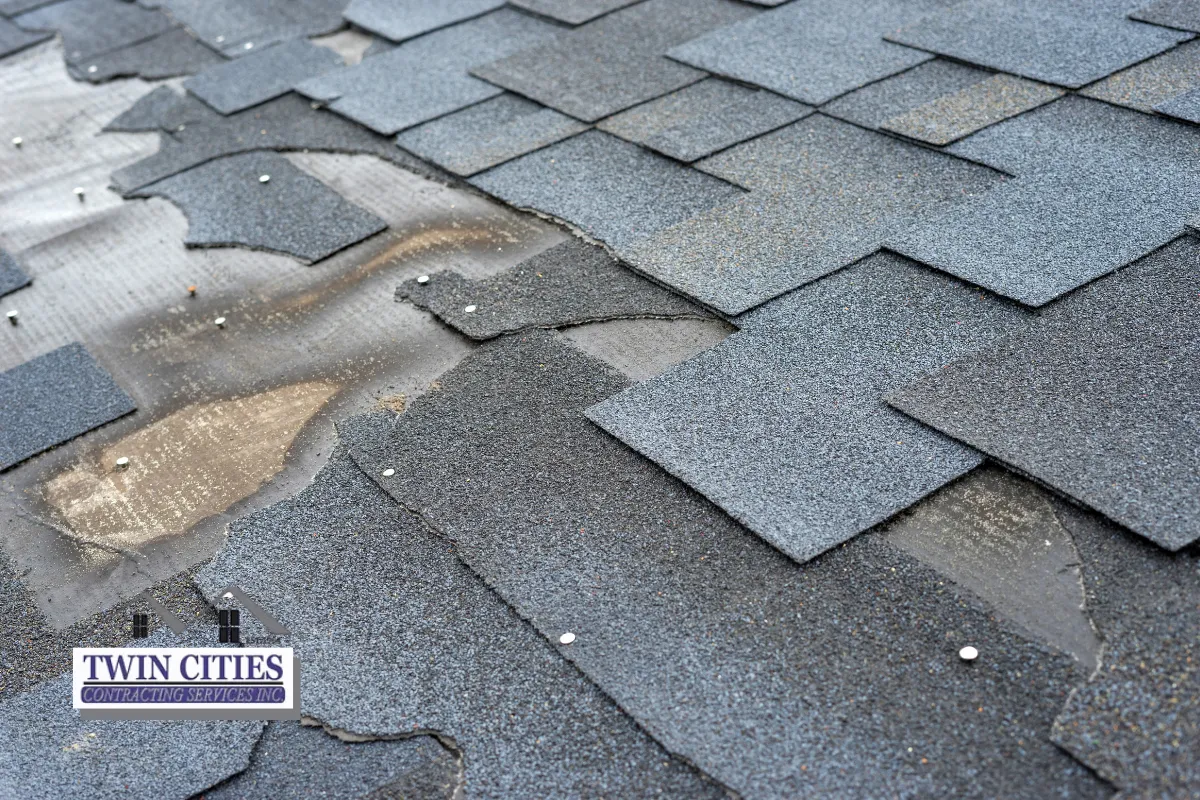
Experienced local roofing contractors understand Bloomington’s permit requirements, Minnesota code for ice and water shield installation, and the city’s inspection process. Bloomington roofing services include inspections and repairs, but a contractor handling a full replacement should also be prepared for deck repairs, which add $3 to $6 per square foot to replacement costs when decking boards are rotted or spaced.
Quality Bloomington roof replacement work includes a full tear off of existing materials, thorough deck inspection, code-compliant ice and water shield installation, new flashing, synthetic underlayment, starter strip, ridge vent, and proper attic ventilation. Roof replacement requires a permit in Bloomington for any work exceeding 100 square foot of roof area. Contractors should pull the permit, not leave it to the homeowner.
For Bloomington homes near the city’s retail and business districts, commercial roofing experience matters for multifamily buildings or flat-roof structures, but the bulk of current demand centers on residential roof replacements. Ask any contractor about workmanship warranties, manufacturer certifications for brands like Owens Corning shingles, and how they plan to protect landscaping and handle debris cleanup around the home.
Practical Steps to Take Before the Next Bloomington Hailstorm
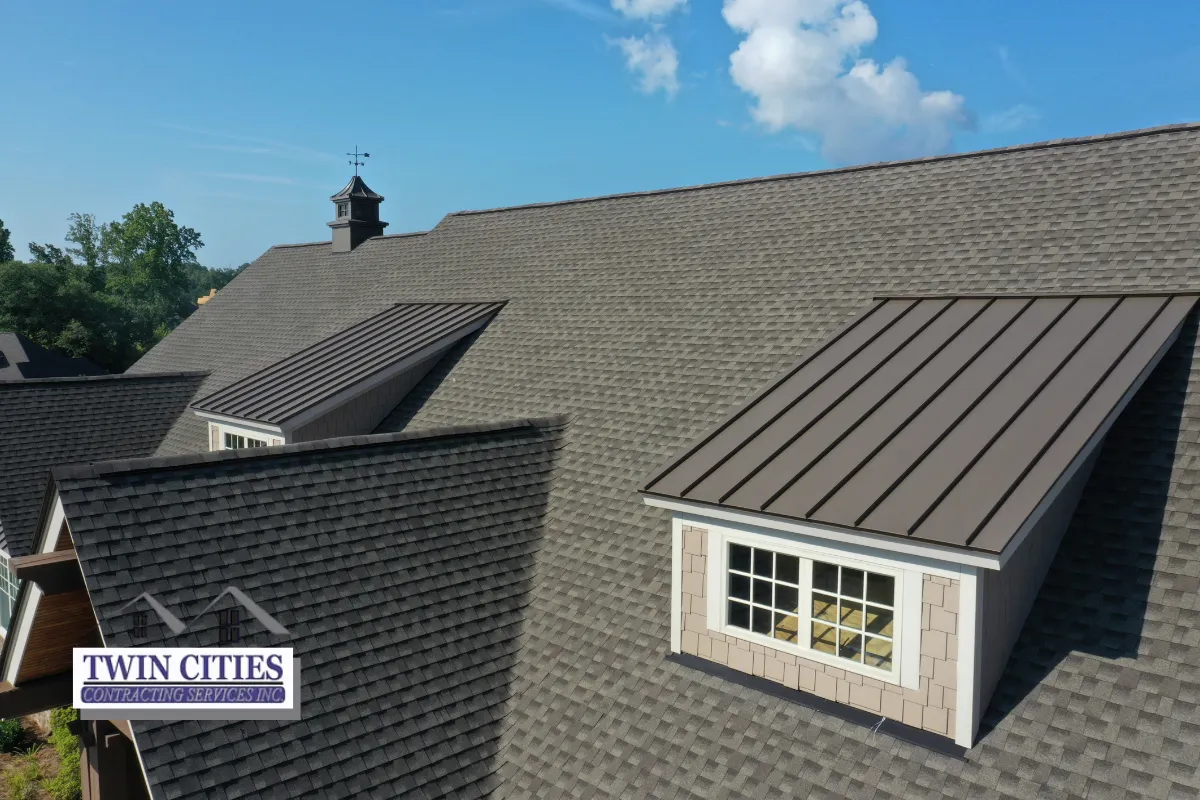
Preparation during calm weather is cheaper and less stressful than scrambling after a storm.
- Schedule a baseline professional inspection so you have dated documentation of your roof’s pre-storm condition. That record gives you a comparison point if hail damage occurs later.
- Review your current policy’s roof language. Confirm whether you have replacement cost or actual cash value coverage, what your wind and hail deductible is, and whether any roof age schedule applies.
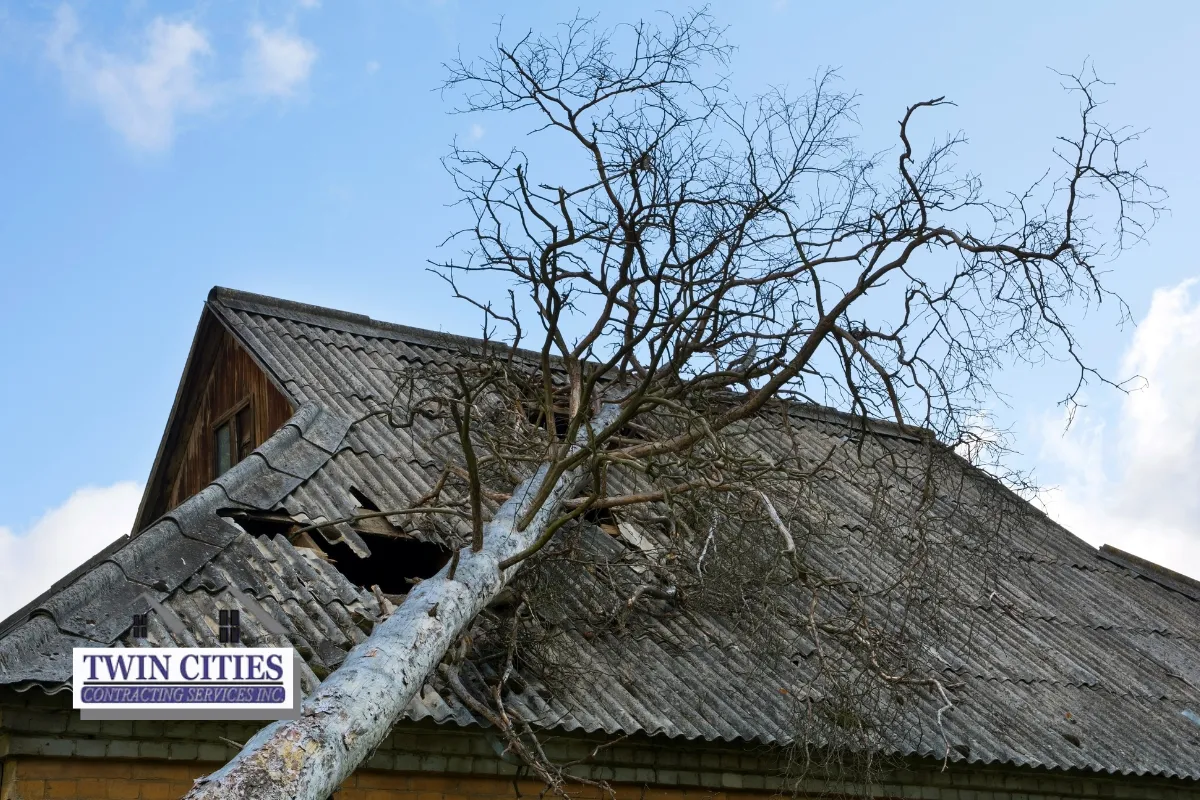
- Trim overhanging tree branches that could snap onto the roof during high winds.
- Clear gutters and downspouts so water drains properly if a storm drops heavy rain alongside hail.
- Check that attic ventilation, including ridge vent and soffit intake, is functioning correctly; blocked ventilation accelerates shingle deterioration from below.
Homeowners are trying to protect property value amid changing insurance dynamics, and the simplest way to do that is to know what you have before the next event. Whether your roof is five years old or fifteen, a current inspection and a clear understanding of your policy put you in a stronger position. Hail events occur 3 to 5 times per year in Bloomington. The next one is a matter of when, not if.
How Twin Cities Contracting Services Inc. Helps Bloomington Weather the Storms
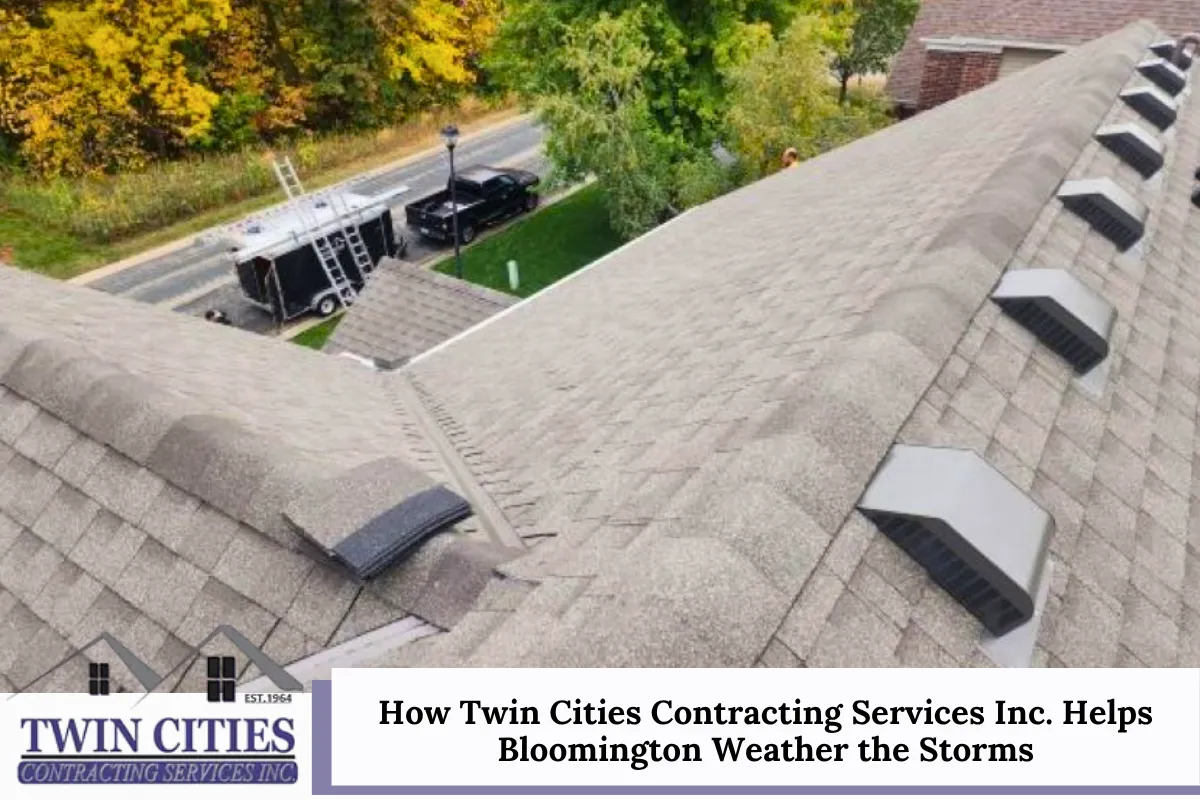
We are Twin Cities Contracting Services Inc., and we work out of 140 W 98th St #202 in Bloomington MN, close to the neighborhoods where storms hit hardest. Our team handles residential roof replacements, storm damage inspections, and select commercial roofing projects for Bloomington homeowners and property managers.
We offer free inspection options for hail damage assessment, detailed written estimates, and guidance tailored to the insurance concerns that Twin Cities homeowners are facing right now. Every project we take on follows Bloomington permitting requirements and Minnesota code for ice and water shield, ventilation, and properly installed materials.
If you need a roof replacement in Bloomington, want a professional inspection after a storm, or just want to understand your options before the next hail season, call us at (952) 405-6201 or fill out the contact form on our website. You can also visit our Bloomington location to talk through your home services and roofing needs in person.
Frequently Asked Questions
Can I Upgrade to Impact-Resistant Shingles During a Hail Claim?
Most insurance policies will pay based on replacing your existing materials with products of like kind and quality. If your current roof has standard architectural shingles, the insurer will base their payout on that product. However, homeowners can typically pay the difference out of pocket to upgrade to Class 4 impact-resistant shingles, which are rated to withstand severe weather and are recommended for hail-prone areas like Bloomington. Class 4 impact-resistant shingles add $1,500 to $3,000 to costs compared to standard options. The investment often pays for itself because impact-resistant shingles can lower insurance premiums by $200 to $600 annually through an insurance discount. Homeowners are increasingly investing in impact-resistant materials to qualify for those insurance savings at renewal time.
How Often Should I Schedule a Roof Inspection in Bloomington?
A professional inspection every one to two years is a reasonable baseline for Bloomington homes, given the area’s storm exposure. After any confirmed hail event affecting your area, schedule an additional inspection regardless of when the last one occurred. Roofs older than 15 years benefit from annual checks because shingle life shortens as materials age, and small problems like cracked flashing or lifted ridge cap can be repaired before they turn into leaks. Keeping dated inspection reports on file also helps during the insurance claim process; they prove pre-storm condition and make it easier to demonstrate that storm damage, not deferred maintenance, caused the need for repair.
Does My HOA Have a Say in My Roofing and Hail Claim Decisions?
Many Bloomington townhomes and planned communities, including developments near River Bluffs and along the major corridors, have HOA covenants that specify approved roofing colors, shingle profiles, and sometimes material brands. Before selecting a product for your new roof, check your HOA’s architectural guidelines. If your HOA requires a specific shingle line or color palette, your contractor and insurance adjuster both need to know, because a mismatch between what the insurer approves and what the HOA requires can delay the project. Some HOAs handle roof replacement as a common-element responsibility, meaning the association’s master policy and board approval drive the process rather than your individual homeowner policy.
What if the Insurance Payout Is Lower Than My Roofing Estimate?
Start by reviewing the adjuster’s scope against your contractor’s line-item estimate. Common gaps include missed code-required items like ice and water shield upgrades, deck repairs, or attic ventilation work that Minnesota code mandates during a full replacement. Your contractor can prepare a supplement request with photos and code references documenting each missing item. The homeowner submits this to the insurance company. If the gap persists, you can request a re-inspection or hire a licensed public adjuster to negotiate on your behalf. The claim reflects the documented damage and applicable code requirements, so the more specific your documentation, the stronger your position. Contractors should assist with documentation but should not take over the policy relationship.
Can I Combine Roofing, Siding, and Gutter Work Into One Project?
Combining exterior work into a single project often improves scheduling efficiency, color matching across materials, and long-term performance because all components are installed to work together. If a single storm damaged your roof, siding, and gutters, your insurer may cover all three under one claim. Coordinating with one contractor for the full scope reduces the risk of gaps between trades and simplifies permitting. From a practical standpoint, having scaffolding and crews already on-site for a roof replacement makes it cost-effective to add new gutters, drip edge replacement, and siding repair at the same time, rather than mobilizing separately for each trade later.
Disclaimer: This article is for informational and educational purposes only and does not constitute legal, financial, or insurance policy advice. Coverage terms, actual cash value (ACV) depreciation schedules, deductibles, and claim outcomes vary significantly by insurance provider and individual policy language. Roof replacement costs and code requirements are subject to property-specific inspections and local municipal guidelines. Always review your specific policy documents with your insurance carrier or a licensed agent, and consult with a licensed contractor and local building officials before making roofing or claim decisions.