Why Hail-Resistant Roofing Is Moving From Trend to Expectation
Bloomington homeowners know the drill. Summer storms roll through, hail hammers the neighborhood, and suddenly half the block needs a new roof. Repeat that cycle every few years, and the cost of “standard” asphalt shingles starts looking less like a bargain and more like a recurring expense.
So is hail-resistant roofing the future in Bloomington? Minnesota’s push for stronger roofs after severe storms suggests the answer is yes. While impact resistant shingles are not yet required by code, they are quickly becoming the practical, future-proof choice for anyone facing a roof replacement. Class 3 and Class 4 shingles, FORTIFIED Roof standards, state-backed grant programs, and insurance incentives are all converging to reshape what a storm resistant roofing system looks like across the Twin Cities.
Key Takeaways
- Hail-resistant roofing and impact resistant shingles are quickly becoming the practical default for Bloomington roof replacements, driven by repeated severe weather events and rising insurance costs.
- Minnesota’s Strengthen MN Homes program and FORTIFIED Roof concepts are pushing the roofing industry toward above-code standards that reduce wind and hail damage by up to 60%.
- Class 3 and Class 4 shingles offer measurably better storm performance, longer service life, and may qualify homeowners for premium discounts of 5% to 35%.
- The best time to upgrade is during a full roof replacement, and working with experienced local contractors familiar with impact resistant products is essential.
Storm Reality in Bloomington: Why Standard Roofs Are Being Rethought
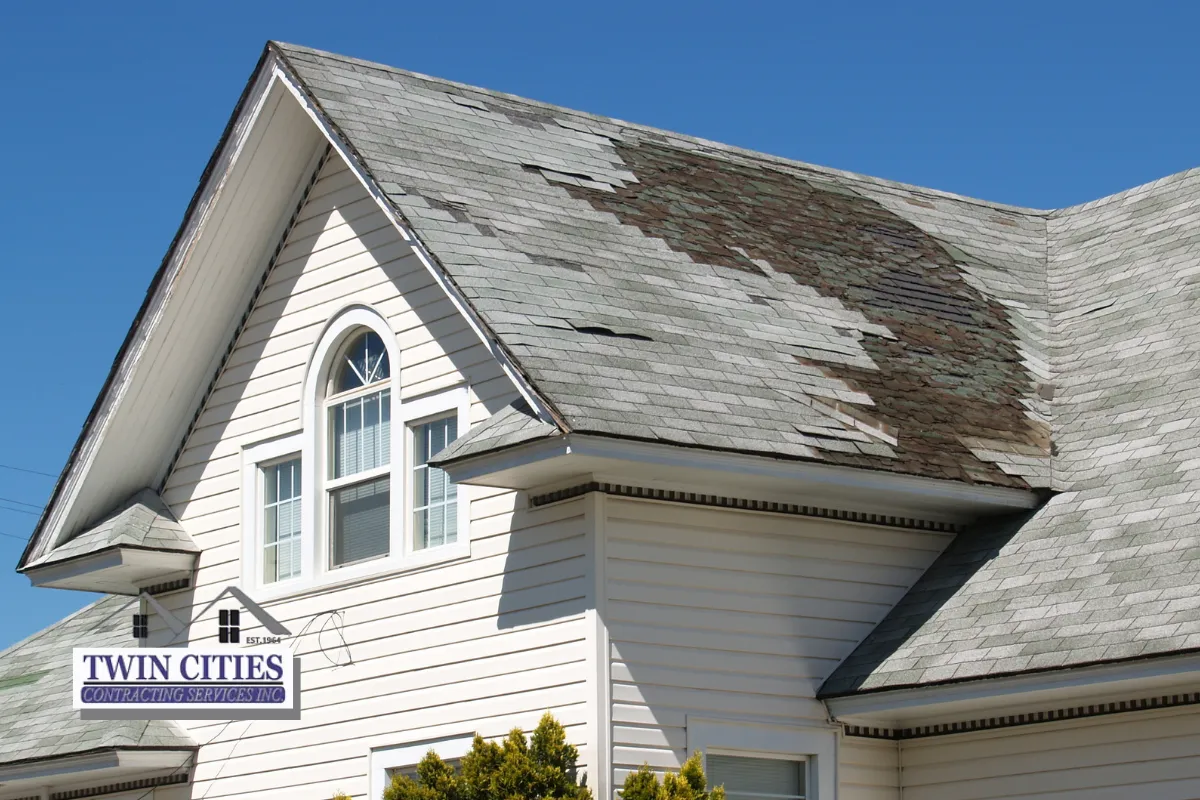
Severe weather has shifted the roofing market in Bloomington, Minnesota over the past decade. Nationally, hail damage caused $20 billion in insurance claims in 2022 alone, and Minnesota experienced 36 severe storms causing over a billion dollars in damage. Nearly 1.8 million homes statewide sit in zones of moderate or greater hail risk, and insurance market pressures are driving the adoption of Class 4 roofing materials across the region.
Minnesota’s weather influences a demand for high-impact roofing systems that goes beyond what older roofing material was designed to handle. Property insurance premiums in the state run roughly 38% above the national average, with hail and wind exposure as primary drivers.
A conventional asphalt shingle roof faces several vulnerabilities during even a moderate hailstorm:
- Granule loss that exposes the fiberglass mat beneath
- Cracking and bruising that weaken the shingle’s structure
- Torn or creased edges that allow moisture infiltration
- Accelerated aging that shortens the roof’s effective lifespan
These patterns explain why many homeowners end up replacing roofs well before their expected end of life. Bloomington follows the Minnesota State Building Code for roofing requirements, which sets wind resistance standards but does not yet mandate impact rated products.
How Impact Resistant Shingles Work: From Asphalt Shingles to Class 4 Impact Performance
Standard shingles come in several tiers. Basic 3-tab shingles are rated for wind speeds up to 60 mph. Architectural shingles have wind ratings between 110 and 130 mph and offer a more dimensional look. Luxury shingles can exceed 300 pounds per square in weight and deliver premium aesthetics. But none of those ratings address hail impacts unless the product carries a specific impact resistance classification.
Impact resistant shingles are engineered differently. They use reinforced fiberglass mats, polymer modified asphalt (often SBS-modified rubber compounds), stronger adhesive bands, and thicker profiles. These materials allow the shingle to flex under hail impacts rather than crack. Hail-resistant roofing benefits include better protection against water intrusion and reduced risk of granule loss and cracking over time.
The roofing industry relies on the UL 2218 test to measure impact resistance. During rigorous testing, steel balls of increasing size are dropped onto shingle samples. Class 4 shingles withstand impacts from a 2-inch steel ball dropped from 20 feet, and the product must survive two strikes at the same point without cracking on the underside. Class 4 is the highest impact resistance rating for shingles, and Class 4 shingles are designed to resist hail damage and cracking far better than lower-rated alternatives. They are also engineered to withstand winds up to 130 mph, giving homes equipped with them added protection against high winds and flying debris.
Products like Malarkey Vista and similar polymer modified lines from three manufacturers commonly available in the Twin Cities use SBS-modified asphalt specifically designed for freeze thaw cycles and severe weather events common in Minnesota.
Here is how the main categories compare:
- Standard architectural shingles: no impact rating, baseline cost, vulnerable to moderate hail, no insurance discount
- Class 3 impact resistant shingles: withstand 1.75-inch simulated hail impacts, moderate cost increase, some insurer discounts
- Class 4 impact resistant shingles: withstand 2-inch simulated hail impacts, the highest impact resistance rating, 20-35% cost premium over standard, substantial insurance discounts available
Read Hail Damaged the U.S. Bank Stadium Roof. What Can Minnesota Hail Damage Do to a Bloomington Home?
The FORTIFIED Roof Model and Minnesota’s Strengthen MN Homes Push
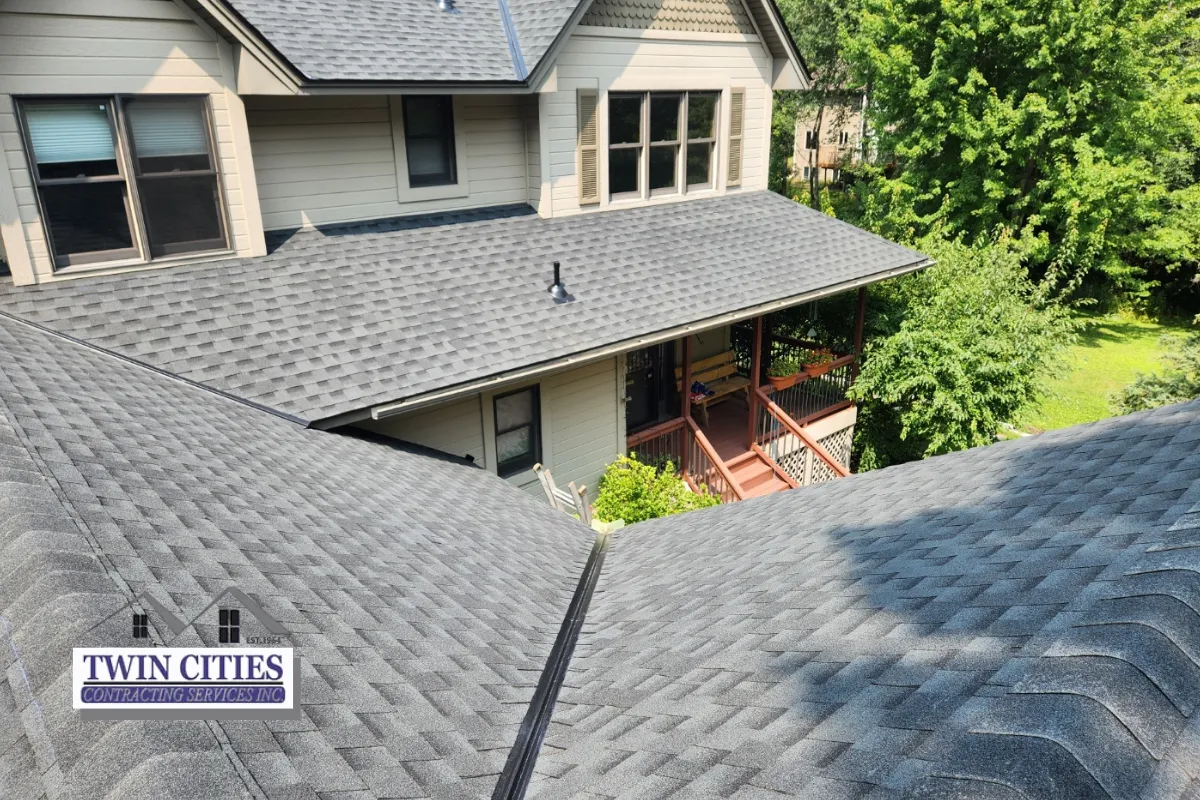
A FORTIFIED roof is an above-code roofing system developed by the Insurance Institute for Business and Home Safety (IBHS). It goes beyond just choosing impact-resistant shingles by requiring a complete system approach to storm damage reduction. Homes upgraded to this standard can see wind and hail damage reduced by up to 60%.
Key details about the program and standard:
- A FORTIFIED roof includes sealed roof decks, enhanced nailing patterns, upgraded underlayment, improved edge details, proper flashing, and ice and water shield, all working together as a durable roofing system designed specifically for home safety in severe weather regions.
- Minnesota established the Strengthen Minnesota Homes Program (under Laws 2023, Ch. 57 & 60) to help homeowners retrofit existing roofs to IBHS FORTIFIED standards. While the state initially provided $1 million in planning funds to build out the framework, full grant rollout has been phased as certified contractor networks are established statewide.
- According to official updates from the Minnesota Department of Commerce, the state is actively building its evaluator network, with full program rollout and grant applications targeted for early 2027. Once live, grants of up to $10,000 to $15,000 will be available for qualifying single- and two-family homes, with priority given to households at or below 115% of area median income. Legislative efforts (such as those highlighted by E&E News and covered by Minnesota House Session Daily regarding HF 4223) continue to push for expanded $35 million grant appropriations and alternative tax breaks.
- Minnesota law (Minn. Stat. § 65A.298) requires insurance companies to offer premium discounts to homeowners who build or replace their roofs to the FORTIFIED standard on insurable properties.
- Bloomington homeowners in Hennepin County are within the targeted pilot area and should watch official Department of Commerce updates for grant launch timelines, keeping in mind that retroactive grant applications for work completed prior to the official grant launch will not be accepted.
Cost, Longevity, and Insurance: Do Class 4 Shingles Pencil Out in Bloomington?
The higher upfront cost of Class 4 shingles is real. For an average Bloomington home, a full roof replacement with Class 4 impact resistant shingles and complementary system upgrades typically runs $11,000 to $19,000 installed, compared to less for standard architectural products. That is roughly a 20-35% premium.
But the long term value calculation favors the upgrade. Hail-resistant roofing materials can last 30 to 50 years when paired with proper ventilation, synthetic underlayment, and quality installation. Standard shingles offer shorter effective service lives, especially in hail-prone areas where repeated storm damage leads to earlier replacement. Hail-resistant roofs also help avoid the construction waste associated with premature replacements, and hail-resistant materials can contribute to lower residential cooling loads due to their denser, more reflective profiles.
Class 4 shingles can lower homeowners’ insurance premiums, and Class 4 shingles may qualify for insurance discounts through many carriers. Insurance companies offer discounts for Class 4 roofing systems, and homeowners can save 5% to 35% on insurance premiums depending on their insurance provider and policy structure. However, insurance discounts for impact resistant shingles vary by carrier, so contacting your agent before installation is important. Impact-resistant shingles can reduce insurance premiums by 5% to 35%, and in hail-exposed areas the payback period on the upgrade often falls within 2 to 5 years.
Here is a quick comparison of upgrade paths:
- Stay with standard shingles: lowest upfront cost, no reduced premiums, higher long-term repair costs, shorter replacement cycles
- Upgrade shingles only to Class 4: moderate cost increase, potential insurance discounts, better hail performance, longer roof life
- Full FORTIFIED-style system (Class 4 shingles plus sealed deck, upgraded underlayment, enhanced edge detail): highest investment, greatest storm damage reduction, strongest insurance and longevity benefits
Is Hail-Resistant Roofing Right for Your Next Replacement? Practical Guidance
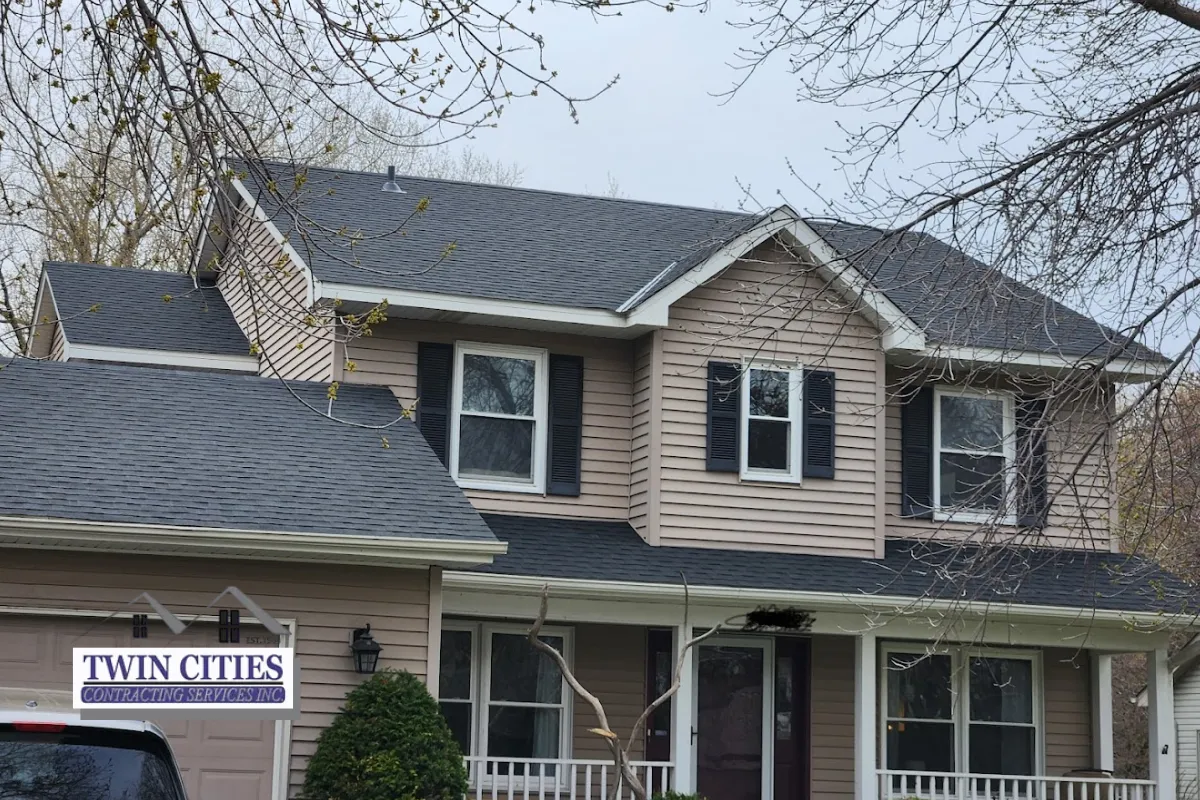
The best time to choose impact resistant shingles is during a full roof replacement, particularly after storm damage when part of the cost may already be covered. Adding a Class 4 upgrade at that point is far more cost-effective than retrofitting later.
An impact resistant roof makes the most financial sense for homeowners planning to stay 10 or more years, those in neighborhoods with documented hail exposure, or owners of higher-value properties where repair costs and claim deductibles are significant.
Before committing, confirm that the full roofing system supports the shingle upgrade. Attic ventilation, ice dam formation prevention through proper insulation and air sealing, synthetic underlayment, and correct flashing all make a real difference in how well Class 4 shingles perform over time.
Decision checklist for Bloomington homeowners:
- Review your current insurance policy for potential premium discounts tied to impact resistant products
- Confirm local permit requirements and Minnesota code compliance for your reroof
- Compare Class 3 vs Class 4 options based on your budget and risk tolerance
- Verify that your contractor has documented experience installing 4 impact resistant shingles and handling the required documentation
Choosing a Contractor for Impact Resistant and FORTIFIED-Ready Roofs in Bloomington
Not every roofer has experience with the specific installation techniques that impact resistant and FORTIFIED-ready roofs demand. Nailing patterns, sealed deck applications, enhanced edge details, and proper ventilation all require training and attention that go beyond a standard reroof. Local contractors emphasize materials that perform well in extreme weather, but the installation quality is what determines whether those materials actually protect your home.
As Minnesota builds out its network of certified FORTIFIED evaluators and contractors, homeowners who choose roofers with relevant training or manufacturer certifications will be better positioned to qualify for insurance incentives and warranty coverage.
When vetting contractors, look for:
- References from recent storm-related roofing projects in Bloomington or nearby communities
- Clear written estimates that itemize materials, labor, underlayment, and system components
- Manufacturer certifications from brands like Owens Corning, CertainTeed, GAF, or Malarkey
- Detailed warranties covering both labor and materials
- Willingness to provide documentation needed for insurance provider discount applications, including product data sheets and completion photos
What Bloomington’s Roofing Future Likely Looks Like After Severe Storms
Repeated hail events, rising deductibles, and Minnesota’s Strengthen MN Homes effort are steadily pushing Bloomington toward more resilient construction standards. Class 4 materials are becoming market norm but not mandatory building standards yet, though that distinction may narrow as insurers, legislators, and code councils continue to respond to storm losses.
Class 4 shingles reduce the risk of hail damage significantly compared to standard products, and many homeowners are already making the switch without waiting for mandates. The difference between paying for repeated repairs on a standard roof and investing once in a system that can withstand damage for decades is becoming harder to ignore.
Hail-resistant roofing is on track to define the next generation of Bloomington roofs. Homeowners who think beyond code minimums and weigh long-term storm resilience, life-cycle cost, and potential insurance incentives will be in the strongest position when the next round of summer storms arrives.
Plan Your Hail-Resistant Roof Upgrade with Twin Cities Contracting Services Inc.
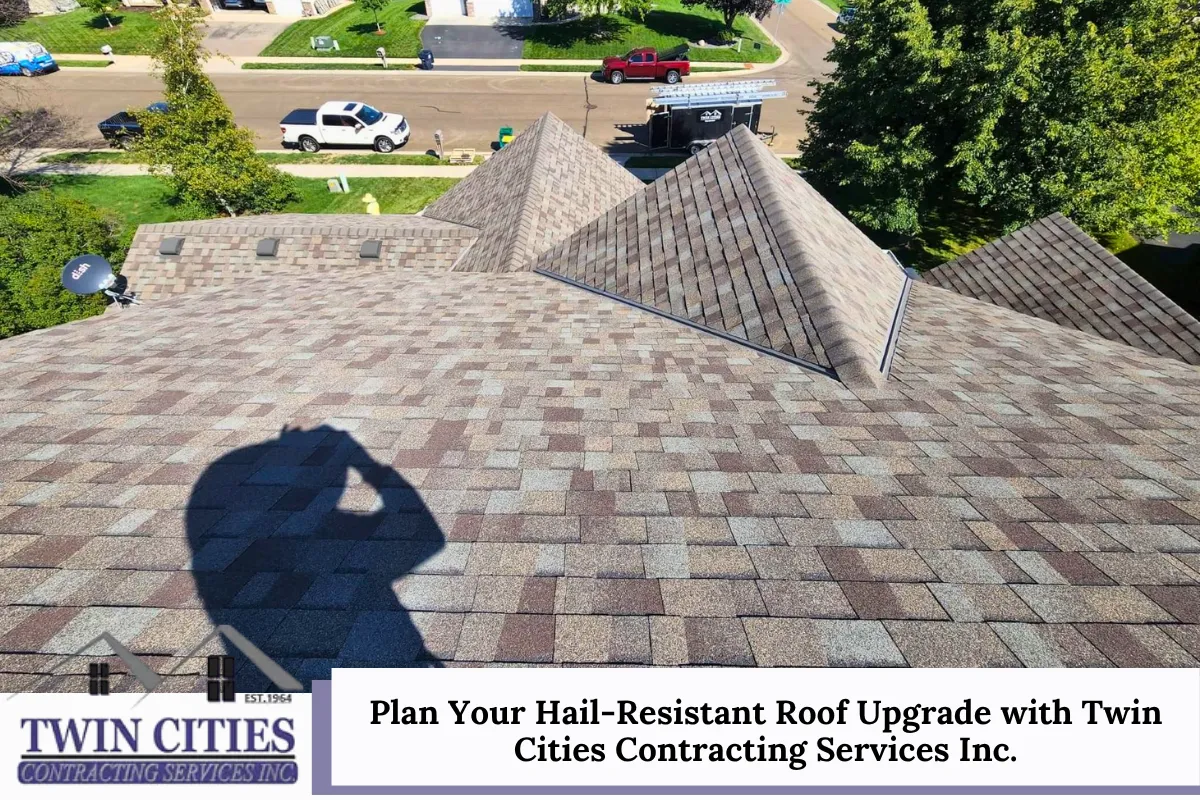
At Twin Cities Contracting Services Inc., we help Bloomington homeowners protect their homes with roofing systems built for Minnesota’s toughest weather. Our team is experienced with impact resistant shingles, Class 4 roofing products, and the underlayment and ventilation upgrades that make an impact resistant roof perform at its best.
We walk every client through product selection, cost comparisons, and the documentation that may help you qualify for insurance incentives. Whether you are replacing a storm-damaged roof or planning a proactive upgrade, we are here to guide you through the process from start to finish.
Call us at (952) 405-6201 or fill out our contact form to discuss your storm-resistant roofing options in person. We build stronger, longer-lasting roofs for Bloomington homes.
Frequently Asked Questions
How do I know if my current roof has enough hail resistance to wait on replacement?
Schedule a professional roof inspection after any major hailstorm. A trained roofer will check for bruised shingles, exposed fiberglass mat, creased tabs, and excessive granule accumulation in gutters, all signs that your roof’s protection has diminished. From the ground, you may spot missing shingles, curling edges, or uneven color patches, but subtle hail damage often requires a closer look. If your roof is nearing the end of its expected lifespan or has undergone multiple repairs from past storms, upgrading to impact resistant shingles at your next replacement is typically more cost-effective than continuing to patch a compromised surface.
Can I get a FORTIFIED Roof in Bloomington before statewide grant funding is fully available?
Yes. Homeowners can voluntarily build to the FORTIFIED Roof standard today by hiring IBHS-certified evaluators and contractors, without waiting for state grants. However, the Minnesota Department of Commerce notes that applications for Strengthen MN Homes grants will not open until early 2027, and retroactive grant applications for previously completed roofs will not be accepted. If you upgrade today, your primary return on investment will be improved storm resilience and immediate insurance premium discounts rather than state grant reimbursement.
Are metal roofs better than Class 4 asphalt shingles for hail in Bloomington?
High-quality metal roofing systems perform well against hail and wind, often shedding smaller hailstones without functional damage. However, large stones can still leave cosmetic dents on metal panels. Class 4 asphalt shingles are specifically tested for impact resistance under the UL 2218 standard and tend to blend more easily with existing residential styles common in Bloomington neighborhoods. Cost, weight, noise during rain and hail, and any homeowners association requirements all factor into the decision. Neither option is universally superior. The right choice depends on your budget, aesthetic preferences, and how long you plan to stay in the home.
Will installing impact resistant shingles affect my property taxes in Bloomington?
Replacing an existing roof with a stronger product, such as upgrading from standard architectural shingles to impact resistant shingles, is generally considered maintenance rather than a property expansion. While any substantial improvement could theoretically influence assessed value, a code-compliant reroof on its own usually does not trigger a significant property tax increase. State Farm and other carriers treat the upgrade as a risk reduction measure, not a value addition in the traditional sense. Homeowners with specific concerns should consult local assessment resources or contact the city of Bloomington for current guidance on how roof upgrades factor into property valuations.
What documentation do I need to qualify for potential Class 4 insurance discounts?
Most insurance providers require proof that the new roof uses approved Class 4 impact resistant shingles. This typically includes an itemized invoice from the contractor, a product data sheet or manufacturer label showing the UL 2218 Class 4 rating, and sometimes a signed completion statement. Some carriers also request installation photos or a specific verification form submitted within a set timeframe after the project wraps up. Call your insurance agent before work begins to confirm their exact documentation requirements and any pre-approval steps. Missing a paperwork deadline or omitting a required form can mean losing out on reduced premiums you would otherwise qualify for.
Disclaimer: This article provides general roofing and policy information for Bloomington homeowners and is not legal, tax, insurance, or engineering advice. Always confirm details with licensed professionals and current Minnesota regulations.
Read Roof Hail Claims Can Reach $40K–$60K: What Bloomington Homeowners Should Know Before Hiring a Roofer